TL;DR
Gen Z couples are rewriting relationship norms by prioritizing emotional intelligence — and while the instinct is right, the execution needs nuance.
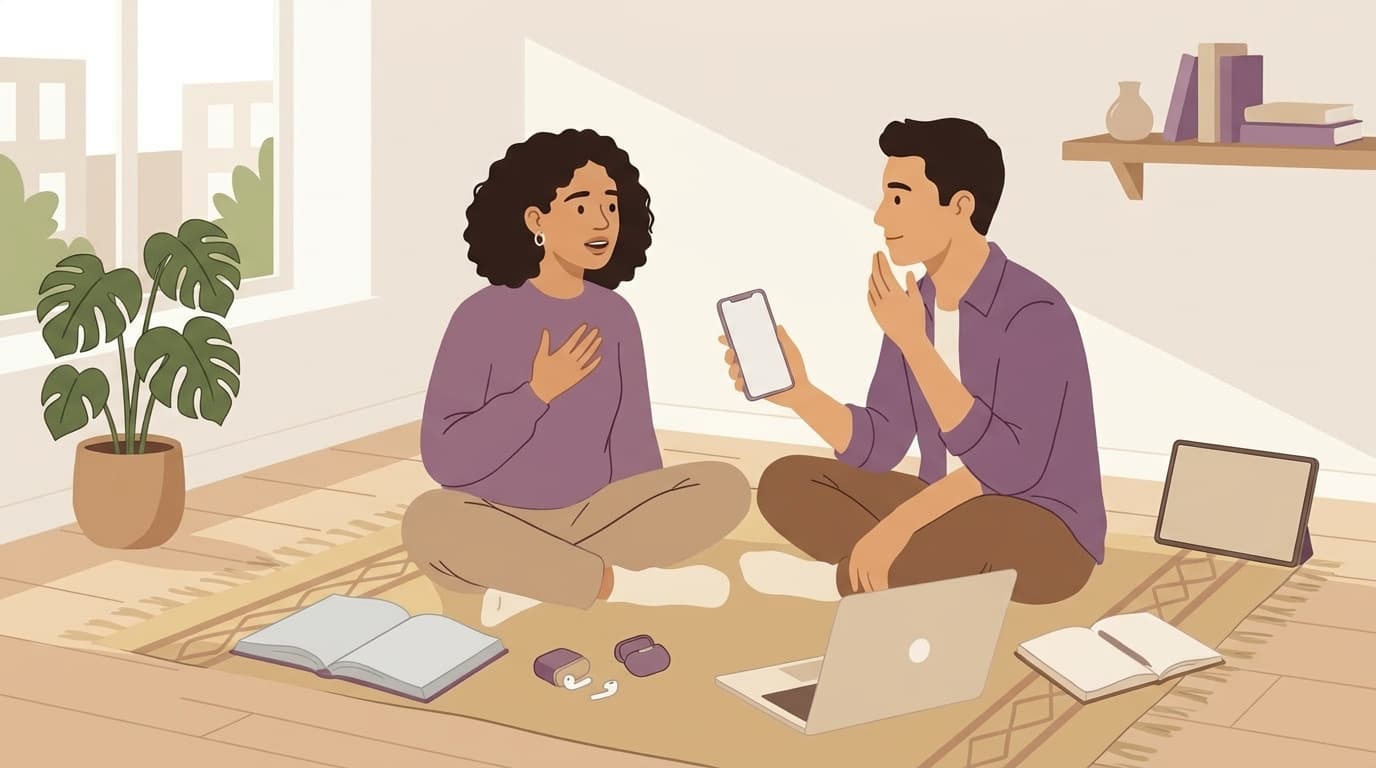
Something shifted. If you've spent any time around couples in their early twenties, you've probably noticed it. They talk about their attachment styles on first dates. They flag their triggers before moving in together. They use words like "emotional regulation" without a hint of irony.
Gen Z is the first generation to enter relationships with a shared language for emotional dynamics. It's changing what modern partnerships look like.
The cultural shift
The normalization of therapy is the obvious starting point. Gen Z grew up watching the stigma around mental health dissolve in real time. By the time they started dating, going to therapy wasn't a secret — it was a green flag.
But therapy alone doesn't explain the shift. What changed was distribution. Attachment theory, once confined to developmental psychology textbooks, went mainstream through TikTok and Instagram. Creators like Thais Gibson and The Holistic Psychologist turned academic frameworks into digestible content. Suddenly, millions of people could identify anxious attachment in themselves before they'd even finished college.
The dating lens flipped too. The cultural conversation moved from cataloging "red flags" — warning signs to flee from — to identifying "green flags," qualities to pursue. Emotional availability. Self-awareness. Willingness to communicate. The aspirational partner shifted from "exciting and mysterious" to "safe and emotionally literate."
This isn't just vibes. Where previous generations might have listed "ambitious," "attractive," or "funny" as their top partner qualities, Gen Z leads with "emotionally intelligent," "self-aware," and "good communicator." The hierarchy of desirable traits has been rewritten.
The cultural infrastructure supports it too. Podcasts like We Can Do Hard Things and The Psychology of Your 20s normalize emotional conversation. Books like Attached and Set Boundaries, Find Peace become bestsellers. The pipeline from research to popular understanding has never been shorter.
The data behind the shift
The numbers tell a complicated story. A meta-analysis tracking attachment styles from 1988 to 2011 found insecure attachment rising from 51% to 58% of the population. More people entering relationships without a secure base. More anxiety, more avoidance, more disorganization in how people bond.
Against that backdrop, Gen Z's embrace of emotional tools makes sense. They're responding to real difficulty, not performing wellness. The American Psychological Association reports Gen Z has the highest therapy utilization rate of any generation. Hinge's annual survey found "emotional availability" consistently ranks among the top traits users look for, outpacing career ambition or physical attractiveness.
The vocabulary has entered everyday speech. Boundaries. Triggers. Attachment style. Emotional regulation. Nervous system. These aren't therapy-room words anymore — they're texting words. A 2024 YouGov survey found that 60% of adults under 30 could identify their own attachment style, compared to roughly 15% of adults over 50.
That shared vocabulary is new. Previous generations had to stumble into emotional awareness through years of trial and error — often after damage was already done. Gen Z starts with the map. They enter their first serious relationships knowing what "anxious attachment" looks like, understanding bids for connection, and recognizing stonewalling as a pattern rather than just "the silent treatment."
Whether that knowledge translates to actual relational skill is a different question entirely.
What's actually working
At its best, this looks like couples who can name what's happening inside them — and communicate it before it becomes a blowup.
Instead of picking a fight about dishes, a partner says: "I'm feeling anxious and need reassurance that we're okay." Instead of withdrawing for three days, someone names the pattern: "I notice I'm shutting down. I need twenty minutes and then I want to come back to this."
This is emotional literacy in action. Amir Levine and Rachel Heller's work in Attached demonstrated that simply understanding your attachment pattern transforms how you navigate conflict. When you know you tend toward anxious protest behaviors — blowing up someone's phone, starting arguments to get a reaction — you can catch the impulse before it hijacks the conversation.
Brene Brown's research on vulnerability and shame has been absorbed so deeply by this generation that many take it as baseline truth: vulnerability is not weakness. Saying "I'm scared" or "I need help" is courage, not failure. Brown's TED talk has over 65 million views. Her ideas seeped into the culture, and Gen Z grew up with them.
The couples doing this well aren't performing emotional intelligence for social media. They're doing the boring daily work: naming feelings in real time, sitting with discomfort instead of reacting, choosing repair over being right.
What's overcorrecting
Here's where it gets messy.
TikTok is a terrible therapist. A 60-second video on dismissive avoidant attachment cannot capture the nuance of a real clinical assessment. Yet people watch one reel and diagnose their partner with an attachment disorder by dinner. "You're textbook anxious-avoidant" has become a conversation-ender rather than a starting point for understanding.
Attachment theory was designed as a tool for self-awareness and growth. When it becomes a label — "I can't help it, I'm avoidant" — it does the opposite. It turns a framework for change into a justification for stagnation. Levine and Heller are clear on this: attachment styles are not fixed personality traits. They're patterns shaped by experience, and they can shift through intentional effort and secure relationships.
Then there's the pathologizing problem. Normal relationship friction — disagreements, different preferences, occasional irritation — gets recast as "toxic." A partner who needs alone time becomes "emotionally unavailable." A partner who wants more closeness becomes "codependent." Every conflict gets run through a clinical filter, and no one can just have a bad day.
The weaponization of therapy language might be the worst overcorrection. "You're violating my boundaries" used as a shutdown tactic. "That's triggering me" deployed to end conversations rather than deepen them. "You need to regulate your nervous system" as a way of saying "your emotions are inconvenient for me." The vocabulary of healing repurposed for control.
The fix isn't less emotional awareness — it's more. Specifically, the humility to recognize that understanding a concept intellectually is different from living it out in a relationship.
Emotional intelligence as daily practice
What gets lost in the discourse: emotional intelligence is not a quiz result. It's not an attachment style label. It's not a vocabulary list.
It's a skill. And like all skills, it's built through repetition.
Research from psychologists Peter Salovey and John Mayer — who coined the term "emotional intelligence" in 1990 — establishes that EQ is malleable. It responds to training. It can be developed at any age, in any relationship stage. A longitudinal study published in the Journal of Applied Psychology found that targeted emotional intelligence interventions produced lasting gains even in adults who had shown low baseline EQ.
The practical implication: the couples with the strongest emotional foundations aren't the ones with the best vocabulary. They're the ones who practice most often.
Asking your partner "How do you feel about this?" on a regular basis — genuinely asking, then listening — builds the neural pathways for emotional awareness. Neuroscience research on empathy shows that the brain regions associated with emotional attunement (the anterior insula and anterior cingulate cortex) strengthen with repeated use. Asking questions about feelings is, measurably, exercise for your emotional brain.
This is why daily question practices work. Not because any single question is magic, but because the habit of asking — turning toward your partner's inner world every day — trains a capacity that compounds over time. Couples who ask each other one meaningful question daily for a year aren't just having 365 conversations. They're building an emotional muscle that shows up in every interaction, including the hard ones.
The Gen Z instinct is right: emotional intelligence matters more than almost anything else in a relationship. The execution just needs to move from labeling to practicing. Less "I know my attachment style" and more "I noticed my pattern showing up just now, and here's what I'm going to do differently." Less identifying the problem and more building the muscle to respond to it in real time.
That's the gap between knowing and doing. And it closes one conversation at a time.
FAQ
Is emotional intelligence innate or learned?
Both, but mostly learned. Research suggests genetics account for roughly 15-25% of variation in emotional intelligence. The rest is environment and practice. Salovey and Mayer's framework treats EQ as a set of skills — perceiving emotions, using emotions to facilitate thought, understanding emotions, and managing emotions — all of which improve with deliberate practice. If you feel like you're "not naturally good at this," you're in the majority. The people who seem naturally emotionally intelligent usually had early environments that trained these skills without anyone naming it.
Can older couples learn from Gen Z's approach?
Yes. The underlying research isn't generational — attachment theory, emotional intelligence, and vulnerability research apply at every age. What Gen Z has done is make these concepts accessible and socially acceptable. Older couples often have more relational experience to work with, which can actually speed up the learning. The barrier isn't ability — it's willingness. If you and your partner can agree that emotional awareness is worth developing, your age is irrelevant. Start with a weekly check-in and build from there.
Is therapy-speak helping or hurting relationships?
It depends entirely on how it's used. When emotional vocabulary helps you name an internal experience — "I'm feeling anxious" rather than "why are you being weird?" — it's genuinely helpful. When it becomes a weapon or a diagnostic tool aimed at your partner, it causes harm. The test is simple: are you using the language to understand yourself and invite connection, or to label your partner and shut down conversation? The vocabulary isn't the problem. The intention behind it is everything.
Building emotional intelligence isn't about knowing the right words — it's about asking the right questions, consistently. Aperi gives couples a daily question practice that builds real emotional literacy over time, not just the vocabulary for it.
Related reading: How Attachment Styles Shape Your Relationship | Why Vulnerability Is the Foundation of Intimacy | The Science Behind Asking Better Questions | 50 Deep Questions for Couples